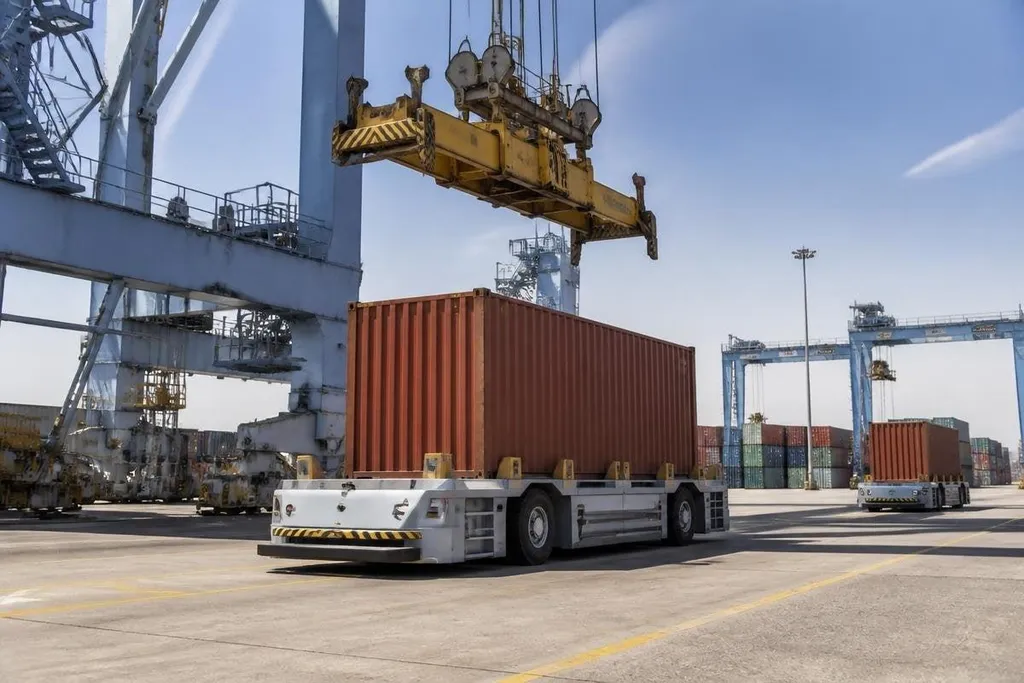
A shipping container can travel from a vessel to a storage yard without a driver sitting in a cab. Port robots now move containers, guide cranes, and check equipment across some of the busiest parts of the supply chain.
For a port manager, the useful question is practical: which jobs can automation handle safely, and where does a person still need to make the call?
- Driverless vehicles carry containers between the quay and yard
- Automated cranes stack 20-foot and 40-foot containers
- Sensors help machines stop when people or equipment enter a lane
Where the robots work
Port automation usually starts at the quay, where ships load and unload containers. A ship-to-shore crane lifts each box from the vessel and places it on a truck, a guided vehicle, or a container carrier.
Automated guided vehicles then follow marked routes between the quay and storage yard. Cameras, LiDAR, and positioning systems help each vehicle find its lane and keep a safe gap from other equipment.
LiDAR measures distance with light pulses, so the vehicle can detect objects that a camera might miss in poor light.
The yard uses another group of machines. Automated stacking cranes pick containers from a vehicle and place them in rows. A control system records each container's position, weight, and destination, then sends work to the next available machine.
That arrangement matters because a 20-foot container and a 40-foot container need different handling points. The software must know the box size before the crane moves, or the load may sit in the wrong slot and create extra work later.
Why ports use automation
The main gain comes from repeatable movement. A vehicle that follows the same route for every trip can carry containers through the yard while a remote operator watches several machines from a control room.
That changes the job rather than removing every person from the process. People still plan the work, handle exceptions, check safety systems, and take control when a vehicle loses its position or finds an object in its path.
Automation also gives the port a record of each move. The system can show when a container left the quay, where it was stored, and which machine handled it. That record helps staff find delays without searching through radio calls and paper notes.
The record matters beyond one port. Reports on robotics companies and machines can place a shipping robot’s task, test site, and date beside its result. The next limit appears in the yard, where route changes test whether the system can keep working.
The limits are in the yard
Ports are difficult places for robots because the work area keeps changing. Containers arrive in different sizes, trucks enter and leave, road surfaces wear, and people may need to cross a machine's route.
Weather adds another problem. Rain can reduce camera quality, strong wind can move suspended loads, and salt air can damage exposed parts. A port needs inspection plans, spare sensors, and a safe way to stop machines when conditions exceed their operating limits.
The handoff between machines can also cause delays. A crane may finish its move, but the receiving vehicle could be late, out of position, or carrying the wrong container. One missed handoff can hold up the next move and leave other equipment waiting.
The system also depends on clean data. If a container's ID, weight, or location is wrong, the software may send the right machine to the wrong task. Human checks still matter at those points.
What to check before buying
A port team comparing an automated system should ask:
- Job scope: Which moves will the robots handle, and which tasks stay manual?
- Container range: Can the system carry the 20-foot and 40-foot boxes used at the site?
- Traffic plan: How will people, trucks, cranes, and robots share the same area?
- Failure response: Can a remote operator stop one machine without stopping the whole yard?
- Weather limits: What rain, wind, dust, and salt conditions can the sensors handle?
- Data links: What happens when positioning data or the control network drops?
I'd judge a port robot by its recovery process, not by a smooth demonstration. A useful system must show what happens after a blocked lane, a lost signal, or a damaged container ID.
The next stage will depend on these routine cases. Ports that can measure recovery time, manual intervention, and container moves per hour will know if automation is helping before they add more machines.